
- balhikingteam@gmail.com
- WhatsApp: +9779823697496
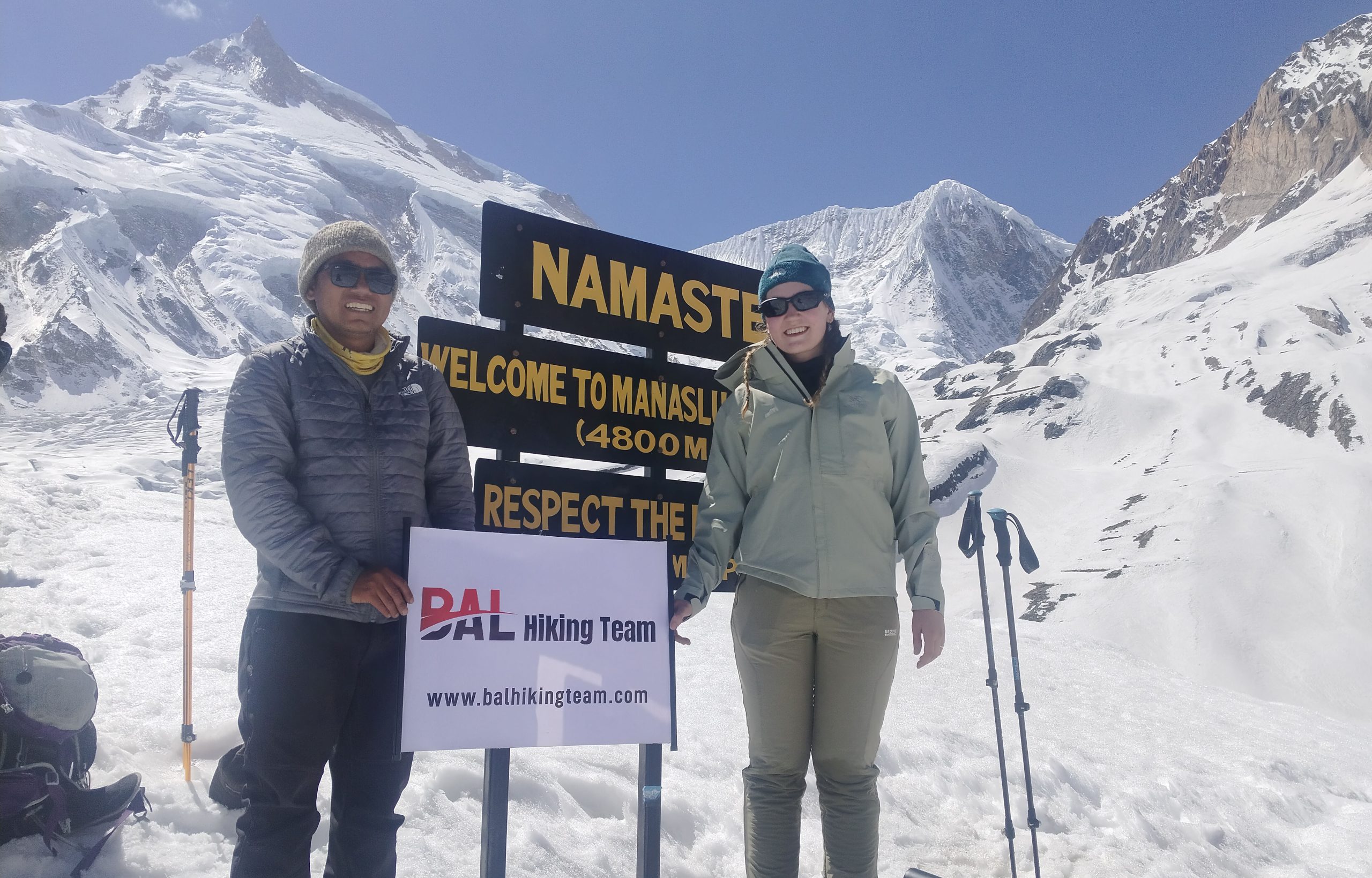
The Manaslu circuit treks is one of Nepal‘s most beautiful and less –crowded trekking routes . it circles Mount Manaslu (8163 m ,) taking trekkers through remote Himalayan valleys , traditional Tibetan-influenced villages Buddhist monasteries , forest , and high mountain landscapes. The treks is famous for its wild scenery, rich culture, and the spectacular crossing of Larky L pass (5160 m,)
The trek generally starts from Soti Khola or Machha Khola and follows the Budhi Gandaki River valley through villages such as Jagat, Deng, Namrung, Lho, Samagaun, and Samdo. After crossing Larkya La Pass, the trail descends through Bhimthang to Dharapani, connecting with the Annapurna region.
Typical Cost (2026-2028)
Budget group trek : USD $ 750- 900
Standrad package : USD $ 900- 1300
1.Guide Cost :USD $ 25-40 per day
2. Porte Cost : USD $ 20-30 per day
3.porter guide :USD $ 25-35 per day
4.food & lodging USD$25-45 per day
5. local Transport cost : USD $ 60 – 150 ktm to ktm
6.provide transport Cost : USD$ 250- 500 ktm to ktm
7.provide jeep cost from Kathmandu to Machakhola USD$ 250
8.provide jeep and Car from Tillche to kathamandu :UDS $ 250
Standard 12- 13 Days Package Cost:$ 895 per person with Local Transport (Ktm to Machhakhola)
Note: Dharapani-Besisahar-Ktm will be Public Transportation, if you need Private Tourist Vehicle we provide but cost will be added.
-Airport Pickup and Drop, All the Transportation accommodation during the trek,
-Full board meals, breakfast, lunch, dinner during the treks
-All necessary permits MCP, ACP, special permits Manaslu cricuit trek,
-One English speaking Government certificate holder trekking guide
-Fingertip pulse oximeter (we use every day to check your oxygen level and pulse in your body to avoid high risk.)
-Guide: food, lodge, transportation, salary, insurance, equipment etc.
-13% Government Vat and official expenses.
-Best available Room and Lodge during the treks.
-Mocker spike for the ice when you going to over the Larkey pass to use for the Shoes.
-Bal Hiking Team provide Duffel Bag packing your equipment during the treks
-Seeping bag down Jacket for use during the treks, after you will be refund for Agency (if you requirement)
-Trekking Certificates, Staffs first aid kid, for high passes mini crampons,
-Seasonal fresh fruits.
-From kathamandu to Machhakhola by Public Bus
-Tillche or Darapani to Besishar sharing Jeep and Public Bus by kathamandu
-Coke, fanta, beer , tea ,coffee Whiskey , better changing , wifi, hot shower, water ect.
-Two trekkers between one porter they will carry around 2o to 25 kg) $ 240
-kathamandu to Machakhola proved jeep $ 235 and Darapani to kathamandu $200
-You trekking gears Helicopter, Trekking Equipment
-International flights,
-Hotel in Kathmandu,Nepal visa, Travel insurance,
-Guide /Porter trekking staff Tips personal expenses.
Day 01: Kathmandu Airport (arrival)-Transfer to the hotel
Balhikingteam Staffs will come to the airport for your arrival in Kathmandu, and then you will drive to the hotel, staying overnight.
Altitude: 1350m.
Day 02: Kathmandu to Machakhola (815 m) Drive
After breakfast, from your Hotel you will drive to Machakhola by private Jeep through the Dhading Benshi and Arughat.From Kathmandu to Dhading Benshi, you drive pokhara highway then from Dhading Benshi begin Rural rough jeep Road to Sotikhola. You will have Lunch on the way somewhere at Simple Nepali Restaurant. on the way explore the villages, nature. You will see Banana ,Bamboo, Millet and Mize fields, then you will get Machha khola there are Check Point, entry your Trekking Permit.
Driving time :- 7-8 hour
Include: Breakfast/ Lunch/ Dinner
Overnight: At lodge/ teahouse
Day 03 : Machha Khola (815 m) – Jagat (1325 m)
Cross the suspension bridge and walk ups and downs narrow path to Khorlabensi along the Budhi Gandaki River side.After Khorlabensi you arrive at Tatopani (Hot spring).From there , you can see the view of Ganesh Himal.Then continue walk to Dobhan by crossing the Budhi Gandaki River. Again cross the suspension bridge at Dobhan and walk to Jagat mostly Ups trail.The place Jagat is Main check point for Manaslu. Entry your Trekking Permit here.
walking time 8 hrs+, 1050m+ and 540m.-
Includes: Breakfast/ Lunch/ Dinner
Overnight: At lodge
Day 04: Jagat (1325 m) – Deng (1875 m)
Walk through the Salleri,Sirdibas village to Ghatta Khola Ups and down trail and cross the suspension bridge then walk uphill to Philim village.The Gurung village Philim rewarded by incredible view of Mt Shringi Himal.At Philim village again there is Check Point.Do not forget to check your Trekking Permit.Then continue walk to Deng through the Nyak with cascading waterfall view.On the way you find today mostly Millet, Mize and Beans terrace fields. As well, Typical Tibetan Gurung village, Houses with an amazing view of Ganesh Himal.
walking time 7-8 hrs, 1227 m + and 681 m.-
Includes: Breakfast/ Lunch/ Dinner
Overnight: At lodge
Day 05: Deng ( 1875 m) – Namrung (2605 m)
Walk to Budhi Gandaki River then cross the bride and continues uphill to Bhi. The Trail goes steeply ups and down .Cross the bridge several times, walk through the Ghap, prok village to Namrung.On the way, enjoy the view of Sringi Himal exactly from Prok Village. As well Mani stones, Tibetan flags, narrow gorge,Gompas ,forest the main highlights of the day.
Walking time : 8-9 hrs, 1524 m+ and 796 m.-
Includes: Breakfast/ Lunch/ Dinner
Overnight: At lodge
Day 06: Namrung (2605 m) – Lho (3170 m)-Syala (3500 m)
The Trail goes mostly up and simply down, you pass the many of villages, Chorten, Gompa and Monastery .On this day , you have chance to get view of Ganesh Himal, Sringi and Himal Chuli ,peak 29 from Namrung and Mt Manaslu view from Sho and Lho.Sylala is the best 360 degree view point. When you arrive at Syala village,
Syala is a peaceful village surrounded by spectacular peaks like Manaslu, Himalchuli, Ngadi Chuli, and more, It’s a perfect spot.
Walking time: Namrung to Lho approx. 4 hrs, 680 m+and 110 m.-walking time : Lho to Syala approx. 3 hrs, 520 m.+ and 160 m.-Includes: Breakfast/ Lunch/ DinnerOvernight: In the lodge
The total walking time approx.7hrs
Day 07: Syala 3500m)-Pogen monestery (4000 m)- Samagau (3530m)
From Syala, passing through alpine forests and terraced fields. The trail offers panoramic views of the Himalayas, including Manaslu, Himalchuli, and Saula Himal, they are very stunning view of mountain range, those day we are taking pack lunch from the teahouse, we will have on the way, when you feel hungry or loss Energy, then we will Reach Samagaun, a picturesque village at 3,530 meters, known for its Tibetan-influenced culture and stunning mountain scenery.
Walking time approx :- 7-8 hours. 500 m.+ and 470.m-
Includes: Breakfast/ Lunch/ Dinner
Overnight: In the lodge
Day 08: Acclimatization/Rest day in Sama (3530 m)
You have today acclimatization day or rest day. You can do as you like. If you want to hike Manaslu Base Camp 4790m. it takes 9-10 hrs for both way ascent and descent 1300m.+ and 1300m.- or you can hike to Birendra Tal 3600m. Approx 3hrs (250m.+/250m.-) ascent and descent. If you hike to Base Camp, take Pack Lunch and water with you. On the way you get not lodges for lunch. Or if you want to relax, enjoy your day at Sama. Anyway, early in the morning you have great chance to capture the Mt Manaslu Sunrise Panorama.
Includes: Breakfast/ Lunch/ Dinner
Overnight: In the lodge
Day 09: Sama ( 3530 m) – Samdo (3870 m)
Walk to Samdo with a great panorama of Mt. Manaslu and through the Mani walls, Juniper, cowshed ,pasturelands to Budhi Gandaki River Then cross the wooden bridge. After crossing the wooden bridge, walk steeply up to Samdo Village. From here begin, Traditional trade route to Tibet via Lajyung la pass 5100m.
walking time: 3- 4hrs , 645 m.+ and 305 m.-
Includes: Breakfast/ Lunch/ Dinner
Overnight: In the lodge
Day 10: Samdo ( 3870 m) – Dharamsala (Larkya Phedi, 4480 m)
Walk to Dharmasala 3-4 hrs through the Larkya Bazar Old Trade route.The Trail is not steeply climb but mostly uphill. Dharmasala (Larkya phedi is surrounded by Panorama of Larkya and Naike Peaks.At Dharmasala there are not comfort lodges.You sleep at simple Lodge or Tent for a night.In the Afternoon you have time, so it’s better to hike 300-500 meters ups and down for acclimatization from Dharmasala.If you feel a bit of headache due to high altitude, we suggest you drink enough water,tea and eat Garlic Soup.
walking time 3-4 hrs, 645m+ and 30m-
Includes: Breakfast/ Lunch/ Dinner
Overnight stay in a shared tent or in a very simple lodge.
Day 11: Dharamsala (Larkya Phedi, 4480 m) – Larkey Pass (5.160m )-Bimthang (3710 m)
Today you have a long walking day of trekking with crossing the Larkey Pass. Early in the morning after breakfast begin the ascent to Larkey Pass.From Dharmasala it takes up to pass 4-5 hrs. After crossing the pass, you will see the breathtaking view of Annapurna II (7,937m), Himlung (7,126m) Cheo Himal,Kanguru , RatnaChuli, GyajiKhang, Namjung Himal and Larkya peak before pass.Then descent to Bhimthang from the snow-covered pass .At Bhimthang you will find good lodge and a delicious Meals with hot shower.
Note: You will get packed lunch for this day. Prepare your trekking equipment, because cold in the morning and on the pass. Drinking water is most important, take this from Dharmasala.
Overnight: At Lodge
Includes: Breakfast / Packed lunch / Dinner
Walking time: 8-9 hours (690m + / 1465m-)
Day 12: Bimthang (3710 m) – Goa (2,515m)
Bhimthang is surround by Mt. Manaslu, Lamjung, Phungi, Himlung and Cheo Himal.In the morning enjoy the Panorama. After breakfast You cross the stream DudhKhola and walk through the pine and rhododendron forest with mountain panorama a little downhill. On the way there are guest houses for lunch stop.Here in the lower heights, the vegetation slowly changes and you reach the Settlement area of the Gurung ethnic group. Before you reach the village of Goa, you will see new view of Mt.Manaslu.
Overnight: At Lodge
Includes: Breakfast / Lunch / Dinner
Walking time: 5-6 hours (150m + / 1200m-)
Day 13: Goa (2,515m)-Besisahar (760m.) – Kathamandu
Today you walk about 3-4 hours through the village of Tilje to Dharapani. From there, you will drive rough mountain road along the Marsyandi River about 2-3 hours to Besisahar.The trail offers views of the valley ,villages, farm terraces and rice fields.
Overnight: At Lodge
Includes: Breakfast / Lunch / Dinner
Walking time: 3-4 hrs
(Drive by local jeep from Dharapani to Besisahar 3-4hrs)
Day 14: Besisahar to Kathmandu (this is optional day)
After Breakfast drive to Kathmandu from Besi Sahar, you can enjoy landscapes. The journey often runs along banks of the Marsyangdi and Trishuli rivers. We also drive through some beautiful villages with farm terraces on both sides of the road. When you arrive in Kathmandu, you have farewell dinner at Nepali Satkar Restaurant.
Driving time: 5-6 hrs by private car/Jeep.
Includes: Breakfast/ Lunch/ farewell Dinner.
Overnight: In the hotel
Day 15: Departure
Agency pick up you at your hotel and drop to international airport on your flight time schedule.
Stunning views of Mount Manaslu and surrounding Himalayan peaks.
Crossing the dramatic Larkya La Pass.
Exploring traditional Tibetan Buddhist villages such as Samagaun and Samdo.
Walking through deep river gorges, forests, alpine meadows, and glacial valleys.
Experiencing a quieter trekking route compared to the popular Everest and Annapurna regions.
Location: Manaslu Region
Duration: Usually 12 –14 days
Highest Point: Larky La Pass (about 5,106–5,160 m)
Distance: Approximately 177 km
Difficulty: Moderate to challenging
Best Seasons: Spring (March–May) and autumn (September–November)
The Manaslu Cricuit treks is perfect for trekkers seeking a more authentic Himalayan experience with fewer tourists , beautiful mountain views, unique culture , and senses of wilderness that is harder to fine on Nepal’s busier trekking routes. As diverse landscapes and wildlife, A challenging but rewarding high- altitude treks.
Most accommodation is in family-run tea houses and lodges operated by local Gurung, Nubri, and Tibetan-influenced communities. Trekkers frequently describe the welcome as warm, personal, and authentic compared with the more commercialized Everest and Annapurna routes.
Rooms are usually simple: twin beds, blankets, shared dining halls, and basic facilities. As you gain altitude, accommodation becomes more rustic, but hosts are known for providing hearty meals and helping trekkers adapt to the mountain environment.
Villages such as Samagaun, Lho, and Namrung tend to have the best tea houses on the route, with some offering attached bathrooms, Wi-Fi, hot showers, and more varied menus.
Higher up, especially around Samdo and Dharmasala, facilities become very basic, but many trekkers still highlight the friendliness and generosity of the lodge owners.
Manaslu Cricuit treks Ethnic group and Culture in the Mountain region Manaslu treks
Gurung —Predominant in the lower hills around villages such as Soti Khola, Machha Khola, and Jagat. They traditionally practice Buddhism, Hinduism, or a blend of both.
Tamang — found in some middle-hill settlements, with strong Tibetan Buddhist cultural influences.
Nubri and Tsumba — Indigenous peoples of the upper Manaslu region.
Tibetan communities — In the higher villages such as Namrung, Lho, Samagaun, and Samdo, the culture, language, architecture, monasteries, and lifestyle are strongly influenced by Tibet due to centuries of trade across the Himalayan border.
Culturally, the trek transitions from Hindu-influenced mid-hill villages to predominantly Tibetan Buddhist communities as you ascend. You’ll see prayer flags, mani walls, chortens, monasteries, and traditional stone houses, especially in the upper valley.
Manaslu Cricut treks Tibetan Buddhist Heritage
Buddhist monasteries (gompas), Prayer flags and prayer wheels, Chortens (Buddhist stupas), Mani walls carved with Buddhist prayers, Traditional Tibetan-style stone houses, one of the most important monasteries on the route is Pungyen Gompa.
Manaslu Cricuit treks about Monetary and Temple
Ribung Gompa – Located in Lho village, famous for its spectacular view of Mount Manaslu behind the monastery. One of the most photographed spots on the trek.
Pungyen Gompa – The largest and most important monastery on the circuit. Many trekkers visit it during their acclimatization day in Samagaun.
Namrung Gompa – A beautiful monastery surrounded by traditional Tibetan-style houses and prayer wheels.
Samdo Monastery – The highest monastery on the main circuit, located near the Tibetan border.
What is Festivals of the Manaslu Region, Manaslu Cricuit treks
Gyalpo Lhosar (Tibetan New Year)
Celebrated mainly in the Nubri Valley villages such as Samagaun and Lho.
Usually falls in February–March.
Features monastery prayers, masked dances (Cham), family gatherings, feasts, and the raising of new prayer flags.
Celebrates the birth, enlightenment, and passing of the Buddha. Monasteries are filled with butter lamps, prayers, and pilgrimages.
Usually occurs during the full moon of April–May.
Honors Guru Rinpoche, who introduced Buddhism to the Himalayas.
Features ritual dances, prayers, and monastery ceremonies.
Celebrated around June–July.
Festivals in Tsum Valley (Extension of Manaslu)
One of the most important Tsum Valley festivals.
Men compete in horse races while the community gathers for music and dancing.
Usually celebrated in November–January.
The Tsum Valley version of Tibetan New Year.
Centered around roasted barley (tsampa), village feasts, and Buddhist rituals.
Celebrated in August.
A unique local festival focused on health, nourishment, and gratitude for food.
Traditional purification festival with masked dances and ritual ceremonies.
Held at monasteries such as Rachen Gompa and other local gompas.
Usually takes place in autumn or winter depending on the monastery calendar.
Best festival for trekkers?
If you’re planning a Manaslu Circuit trek specifically for culture, the most memorable festivals are:
Yartung (horse racing and village celebrations)
Gyalpo Lhosar (Tibetan New Year)
Saga Dawa (major Buddhist festival)
Dhachyang in Tsum Valley (traditional horse festival)
Manaslu Base camp treks and Manaslu Cricuit treks?
The classic route circles around Mount Manaslu and crosses the high Larkya La Pass at about 5,160 m. The trek typically takes 13–15 days and passes through Tibetan-influenced villages such as Namrung, Lho, Samagaun, and Samdo. It is known for monasteries, Buddhist culture, diverse landscapes, and fewer crowds than Everest or Annapurna.
Highlights
Manaslu base camp treks
This trek focuses on reaching Manaslu Base Camp at roughly 4,800 m. Most trekkers hike from Samagaun to the base camp and return the same day. The main attraction is getting close to the glacier and the massive north face of Manaslu.
Highlights
Manaslu circuit treks and Tsum valley treks about border Nepal and Chaina Tibet
This is probably the most culturally rich trek along the Nepal–Tibet frontier.
The upper Manaslu valley beyond Sama Gaun.
Many trekkers combine both regions.
For experienced trekkers:
Which is best?
Hot spring Manaslu Cricuit treks,
On the classic Manaslu Circuit route, you’ll pass through the village of Tatopani between Machhakhola and Doban. There are natural geothermal pools beside the Budhi Gandaki River where trekkers often stop for a soak. The springs are relatively basic—don’t expect a resort—but they’re a great place to relax sore legs before heading higher into the mountains.
The most notable hot spring spots in the area include:
Machhikhola Natural Hot Water Spring — a natural hot-water spring area near the lower Manaslu trail.Jagat hot spring — a small thermal bath site on the lower section of the route.
Many recent trekkers still mention the Tatopani hot springs as a memorable stop on the Manaslu Circuit, especially because the trek combines Tibetan-influenced villages, remote valleys, and a chance to soak in hot mineral water on the same journey.
On the classic Manaslu Circuit route, you’ll pass through the village of Tatopani between Machhakhola and Doban. There are natural geothermal pools beside the Budhi Gandaki River where trekkers often stop for a soak. The springs are relatively basic—don’t expect a resort—but they’re a great place to relax sore legs before heading higher into the mountains.
The most notable hot spring spots in the area include:
Machhikhola Natural Hot Water Spring — a natural hot-water spring area near the lower Manaslu trail.
Jagat hot spring — a small thermal bath site on the lower section of the route.
Many recent trekkers still mention the Tatopani hot springs as a memorable stop on the Manaslu Circuit, especially because the trek combines Tibetan-influenced villages, remote valleys, and a chance to soak in hot mineral water on the same journey.
This is one of the most famous hidden side hikes near the lower–mid Manaslu trail.
Why it’s popular:
It’s one of the best “bonus” hikes on the Manaslu trek because it gives you alpine scenery without going too high or needing extra permits beyond Manaslu region trekking.
This is much higher and more remote — closer to the Manaslu Circuit’s upper section.
Why it’s special:
Birendra Lake is a glacial lake formed from Manaslu glacier meltwater, sitting right below the north face of Mount Manaslu region .
Altitude:~3,600–3,700 m
It’s often done as an acclimatization day hike before going to higher places like Manaslu Base Camp or Larke La.
Pungyen Monastery is one of the most important and scenic monasteries on the Manaslu Circuit Trek.
From the monastery you get:
Most trekkers go here during rest day in Samagaun because:
Manaslu Circuit treks Flora (Plants)
As the trail climbs from around 700 m to over 5,100 m at Larkya La Pass, vegetation changes dramatically:
Subtropical forests: sal, alder, bamboo, and chir pine
Temperate forests: oak, maple, fir, hemlock, and rhododendron
Subalpine zone: birch, juniper, and dwarf rhododendron , Alpine meadows: grasses, herbs, wildflowers, and medicinal plants
The trek lies largely within the Manaslu Conservation Area, which protects a high diversity of Himalayan plant species.
Manaslu Circuit treks flora and Fauna (Wildlife)
Notable mammals include:
Birdwatchers may spot:
1.Himalayan Monal
2.Blood pheasant
3.Snow partridge
4.Golden eagle
5.Various vultures and mountain finches
Manaslu Circuit treks Best Season for Wildlife and Flowers
Spring (March–May): Rhododendrons bloom and bird activity is high.
Autumn (September–November): Clear views and excellent wildlife-spotting conditions.
Manaslu Cricuit treks Birdwatching by Elevation
Lower elevations (700–2,000 m): cuckoos, woodpeckers, barbets, and songbirds.
Middle elevations (2,000–3,500 m): pheasants, laughingthrushes, and flycatchers.
Higher elevations (above 3,500 m): snow partridges, eagles, vultures, and alpine species.
Manaslu Cricuit treks Best Time for Birdwatching
Spring (March–May): breeding season, many birds are active and vocal.
Autumn (September–November): clear weather and excellent visibility.