
kanchenjunga trek cost with Guide and Porter 40$
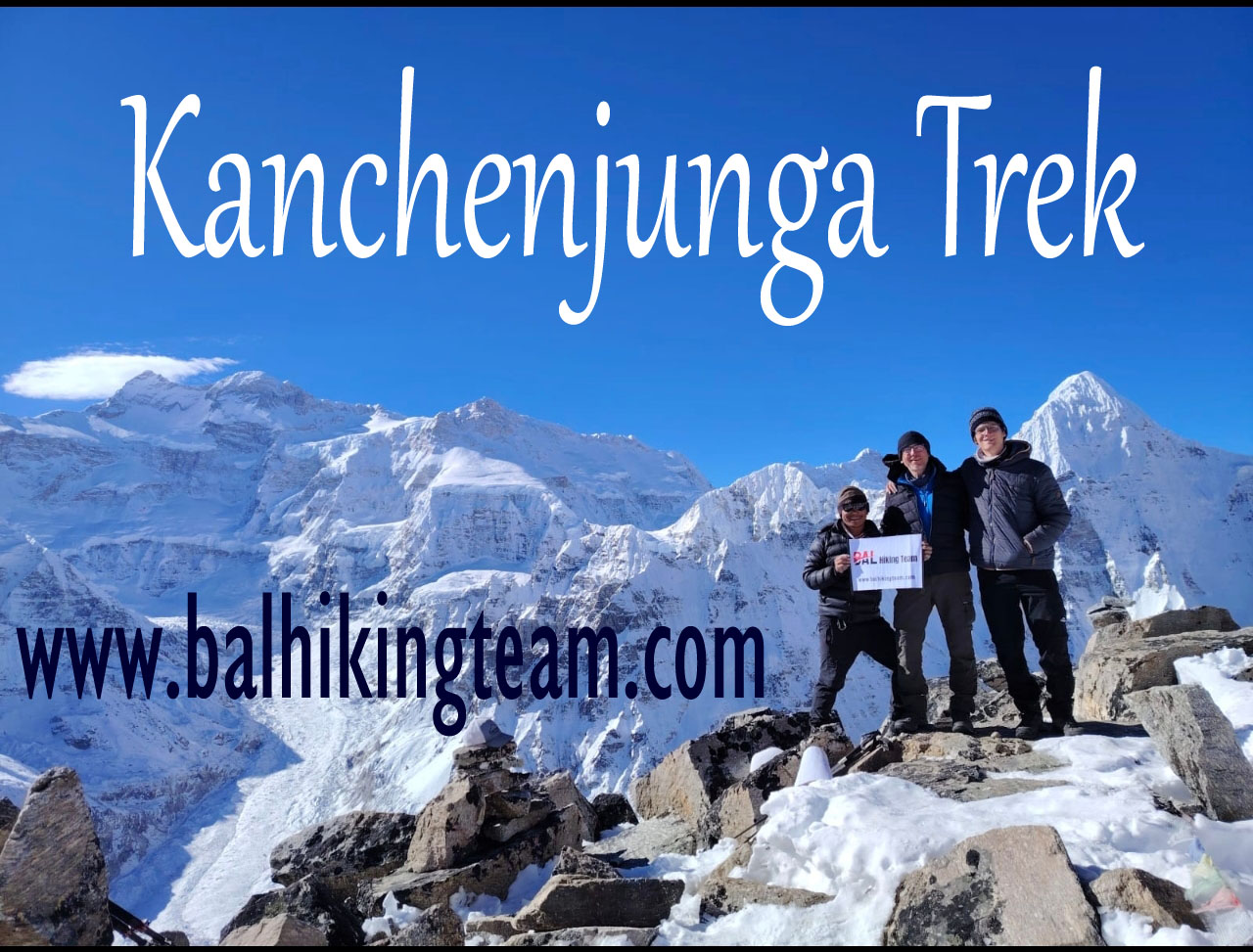
Trip Introduction
kanchenjunga trek cost with Guide and Porter
The Kanchenjunga Trek is one of the most remote and expensive treks in Nepal, mainly because a licensed guide is mandatory and logistics are complex. Here’s a clear breakdown of cost with guide + porter.
Total Kanchenjunga Trek Cost
Overall price (per person)
- Budget / independent style: $1,800 – $3,000
- Standard package (guide + porter + all): $3,500 – $6,000+
- Total: $1,800 – $3,000 per person
Includes: - Guide + porter
- Permits
- Food & accommodation
- Transport (flight + jeep)
- Flight for both way ktm/BDR and BDR to Ktm
Kanchenjunga Trek Cost (with Guide & Porter)
1. Guide & Porter Cost (per day)
- Guide: $40 per day
- Porter: $25 per day
- Porterguide cost is 35$ per day
Included Services for Package Cost
Trekking Staff
- Licensed trekking guide
- Porter(s) (usually 1 porter for 2 trekkers)
- Staff salary, food, accommodation, insurance
- Bal Hiking Team Duffel Bag
Accommodation
- Teahouse/lodge accommodation during the trek
- Basic guesthouses in remote villages
Meals
- 3 meals per day (Breakfast, Lunch, Dinner)
- Tea/coffee (limited in some packages)
Transportation
- Kathmandu → Bhadrapur flight or jeep /Bhadrapur to ktm flight
- Bhadrapur → Taplejung → Sekathum (trek start point)
- Return transport back to Kathmandu
Permits & Fees
- Kanchenjunga Restricted Area Permit
- Kanchenjunga Conservation Area Permit
- Local municipality/entry fees
Equipment (basic support)
- First aid kit (carried by guide)
- Duffle bag (sometimes provided)
Excluded Services for Package Cost
International & Personal Travel
- International airfare to/from Nepal
- Nepal visa fees
Kathmandu Expenses
- Hotel in Kathmandu (before/after trek, unless included)
- Meals in Kathmandu
Personal Expenses
- Snacks, chocolates, soft drinks
- Alcoholic beverages
- Water,Hot showers, charging devices, WiFi
Personal Gear
- Trekking equipment (boots, jackets, sleeping bag unless rented)
- Personal insurance (mandatory but not always included)
Emergency & Tips
- Emergency rescue (helicopter evacuation)
- Travel/medical insurance
- Tips for guide and porter (expected but optional)
21 Days Kanchenjunga Trek Itinerary (Full Circuit)
Day 1: Fly Kathmandu → Bhadrapur, Drive to Ilam
- Flight to Bhadrapur (45 min)
- Scenic drive to Ilam (tea gardens)
- Altitude: 1,200 m
- Overnight: Lodge
Day 2: Drive Ilam → Taplejung (Suketar)
- Long drive through hills and villages
- Gateway to Kanchenjunga region
- Altitude: 2,420 m
- Overnight: Lodge
Day 3: Trek Suketar → Mitlung
- Easy descent through forests and terraced farms
- First views of rural eastern Nepal
- Altitude: 921 m
- Overnight: Teahouse
Day 4: Mitlung → Chirwa
- Walk along Tamor River
- Pass Rai and Limbu villages
- Altitude: 1,270 m
Day 5: Chirwa → Sekathum
- Enter restricted Kanchenjunga Conservation Area
- Subtropical forests, waterfalls
- Altitude: 1,660 m
Day 6: Sekathum → Amjilosa
- Steep ascent through dense jungle
- Narrow trails and suspension bridges
- Altitude: 2,498 m
Day 7: Amjilosa → Gyabla
- Bamboo forests and rhododendron
- Tibetan-influenced villages
- Altitude: 2,725 m
Day 8: Gyabla → Ghunsa
- Enter alpine region
- Beautiful monastery village
- Altitude: 3,475 m
- 🛑 Important acclimatization point
Day 9: Acclimatization Day in Ghunsa
- Short hikes and rest
- Explore monastery and surroundings
Day 10: Ghunsa → Kambachen
- Glacier views begin
- Cold, windy terrain
- Altitude: 4,050 m
Day 11: Acclimatization in Kambachen
- Hike to nearby viewpoints
- Prepare for higher altitude
Day 12: Kambachen → Lhonak
- Rugged terrain and moraine landscapes
- Altitude: 4,780 m
Day 13: Lhonak → Pangpema (North Base Camp) → Lhonak
- Early hike to Kanchenjunga North Base Camp
- Stunning views of glaciers and peaks
- Return to Lhonak
- Max Altitude: 5,143 m
Day 14: Lhonak → Ghunsa
- Long descent back to Ghunsa
Day 15: Ghunsa → Sele La
- Climb towards high passes
- Altitude: ~4,200 m
Day 16: Sele La → Cheram (via passes)
- Cross Sele La, Sinion La, Mirgin La
- Incredible Himalayan panorama
- Altitude: 3,870 m
Day 17: Cheram → Ramche (South Base Camp area) → Cheram
- Visit Kanchenjunga South Base Camp (Oktang)
- Views of Yalung Glacier
- Return to Cheram
Day 18: Cheram → Tortong
- Descend through rhododendron forests
- Altitude: 2,995 m
Day 19: Tortong → Yamphudin
- Steep descent and climbs
- Mixed cultural villages
- Altitude: 2,080 m
Day 20: Yamphudin → Taplejung → Drive to Bhadrapur
- Trek ends
- Drive back for next-day flight or onward travel
Day 21: fly to Kathmandu
- Today fly to Kathmandu
Kanchenjunga trek highlights
The Kanchenjunga Trek is one of Nepal’s most remote and adventurous Himalayan journeys. Here are the key highlights that make it truly special:
- World’s Third Highest Mountain
- The trek circles around Mount Kanchenjunga (8,586m)
- Offers breathtaking close-up views of massive हिमाल ranges
- Two Base Camps Experience
- Unique chance to visit both:
- Kanchenjunga North Base Camp
- Kanchenjunga South Base Camp
- Few treks in Nepal offer two base camps in one route
- Rich Biodiversity & Conservation Area
- Inside Kanchenjunga Conservation Area
- Home to rare wildlife like:
- Snow leopard
- Red panda
- Himalayan black bear
- Diverse vegetation from tropical forests to alpine zones
- Dramatic Landscapes
- Deep valleys, high passes, glaciers, and waterfalls
- Stunning glaciers like Yalung Glacier
- Remote & Off-the-Beaten-Path
- One of the least crowded treks in Nepal
- True wilderness experience with limited infrastructure
- Perfect for adventure seekers
- Unique Culture & Traditions
- Experience local life of:
- Rai people
- Limbu people
- Tibetan-influenced culture in higher regions
- Visit monasteries, prayer flags, and traditional villages
- Spectacular Mountain Views
- Views of peaks like:
- Jannu (Kumbhakarna)
- Kabru
- Rathong
- Challenging High Passes
- Crossing Sele La Pass (4,290m)
- Adds adventure and panoramic viewpoints
- Authentic Tea House & Camping Experience
- Mix of basic tea houses and camping in remote sections
- Gives a raw Himalayan expedition feel
- Scenic Flights & Diverse Terrain
- Flight to Bhadrapur
- Drive through hills to Taplejung
- Gradual transition from lowlands to high Himalayas
Summary
The Kanchenjunga trek is ideal if you want:
- Less crowded trails
- Raw adventure and wilderness
- Cultural immersion
- Dramatic Himalayan scenery
Best time for Kanchenjunga Trek
The best time for the Kanchenjunga region trek is mainly during spring and autumn, when weather and mountain views are at their best.
Spring Season (March – May)
- Best overall time
- Clear skies with blooming rhododendron forests 🌺
- Moderate temperatures (not too cold at high altitude)
- Excellent mountain views, including Mount Kanchenjunga
- Ideal for photography and nature lovers
Autumn Season (September – November)
- Most popular trekking season
- Stable weather after monsoon
- Crystal-clear visibility of mountains
- Comfortable temperatures
- Best for first-time trekkers and groups
Winter (December – February)
- Very cold, especially at higher altitudes
- Heavy snow may block passes
- Fewer trekkers (quiet trails)
Only suitable if you’re experienced and well-prepared
Monsoon (June – August)
- Heavy rain, leeches, and landslides
- Poor visibility (cloudy mountains)
- Trails become slippery
Summary
- Best months: March–May & September–November
- Top pick: October and April for perfect conditions
Kanchenjunga Trek different itineraries info
Here are the different Kanchenjunga Trek itineraries explained clearly so you can choose depending on your time, fitness, and interest.
Kanchenjunga Trek – Main Itinerary Options
The Kanchenjunga region generally has 3 major trekking routes:
- North Base Camp (Pangpema)
- South Base Camp (Oktang / Yalung Glacier)
- Full Circuit Trek (North + South combined)
1 North Base Camp Trek (Short / Classic Route)
12–16 days
This is the most popular and “fastest” Kanchenjunga trek.
Route Summary:
Kathmandu → Bhadrapur → Taplejung → Ghunsa → Kambachen → Lhonak → Pangpema (5,143m) → return same way
Key Highlights:
- Pangpema Base Camp (North Base Camp)
- Close views of Kanchenjunga North Face
- Jannu Peak views (very dramatic)
- Tibetan-style villages (Ghunsa area)
Best for:
- Limited time trekkers
- Strong altitude experience wanted in shorter time
- Focus on glaciers & high mountains
Note:
- No South Base Camp
- Same trail back (less variety)
Typical structure is around 14–16 days depending on acclimatization
2 South Base Camp Trek (Oktang Trek)
10–15 days
A greener, cultural and less harsh route.
Route Summary:
Kathmandu → Taplejung → Yamphudin → Tseram → Ramche → Oktang (4,730m) → return
Key Highlights:
- Oktang viewpoint (South Face of Kanchenjunga)
- Yalung Glacier
- Rhododendron forests
- Limbu & Rai villages
Best for:
- Cultural experience
- Easier altitude compared to North side
- Scenic forest + glacier mix
- Lower altitude than North Base Camp
- Less crowded but less “high glacier drama”
3 Kanchenjunga Circuit Trek (North + South)
20–26 days
This is the full adventure trek and most complete version.
Route Summary:
Kathmandu → Taplejung → South Base Camp → cross Sele La Pass → North Base Camp → return
Key Highlights:
- BOTH base camps (Oktang + Pangpema)
- Sele La Pass (4,800–4,900m)
- Forests + glaciers + high passes
- Best Himalayan diversity in one trek
Best for:
- Experienced trekkers
- Full wilderness adventure
- 3+ weeks availability
Note:
- Physically demanding
- High passes + long trekking days
Usually takes 20–24+ days depending on itinerary style
Quick Comparison Table for Kanchenjunga Trek
| Route | Duration | Difficulty | Main Highlight |
| North Base Camp | 12–16 days | Hard | Pangpema + glaciers |
| South Base Camp | 10–15 days | Moderate | Forest + cultural villages |
| Full Circuit | 20–26 days | Very Hard | Both base camps + high pass |
Which one should you choose?
- Short time (2 weeks): North Base Camp
- Culture + easier trek: South Base Camp
- Best adventure in Nepal: Full Circuit Trek
Kanchenjunga Trek Permit Information
1. Restricted Area Permit (RAP) – Most important permit
This is mandatory for entering the Kanchenjunga restricted zone (Taplejung region).
Key points:
- Required for trekking inside restricted villages like Lelep, Ghunsa, Yamphuding
- Must be arranged through a registered trekking agency in Nepal
- Solo application is not allowed independently
- You must trek with a licensed guide
Cost (2026 updated range):
- USD 20 per person per week (first 4 weeks)
- After 4 weeks: USD 25 per week
For a typical 18–24 day trek, cost is usually:
- USD 60 – 100 per person
2. Kanchenjunga Conservation Area Permit (KCAP)
This permit is for entering the protected conservation zone.
Key points:
- Covers wildlife and conservation area (red panda, snow leopard habitat)
- Can be issued in Kathmandu (Nepal Tourism Board) or sometimes at entry points
- One-time fee (no daily/weekly cost)
Cost:
- NPR 2,000 per person (foreign trekkers)
(≈ USD 15–20)
3. TIMS Card (❌ NOT required)
- TIMS card is not needed for Kanchenjunga trekking
- RAP replaces it completely
Required documents
To obtain permits via trekking agency:
- Valid passport (6+ months validity)
- Nepal visa
- Passport-size photo
- Trek itinerary
- Travel insurance (high-altitude coverage recommended)
Important Rules
- Minimum 2 trekkers required (usually enforced for RAP processing)
- Must go through a licensed trekking company
- Permits are checked at several checkpoints (Taplejung, Ghunsa, etc.)
- Carry printed copies at all times
Simple Summary
You need:
✔ RAP (Restricted Area Permit) → main trekking permit
✔ KCAP (Conservation Area Permit) → conservation entry
❌ No TIMS card
Kanchenjunga Trek meals and accommodation information
On the Kanchenjunga Trek, both meals and accommodation are simple, basic, and fully teahouse-based, because the region is very remote and less developed than popular routes like Everest or Annapurna.
Here’s a clear breakdown:
Accommodation on Kanchenjunga Trek
🏡 Teahouses & local lodges (main option)
- You stay in small family-run teahouses
- Rooms are usually:
- Twin-sharing (2 beds)
- Wooden beds with mattress, pillow, blanket
- Very basic furniture
- Bathrooms are mostly:
- Shared toilets
- Often squat-style or simple western toilets in lower villages
- Heating:
- Only in dining hall (yak dung or stove)
- Bedrooms are usually cold at night
As you go higher (Ghunsa, Kambachen, Lhonak, Ramche):
- Facilities become more basic
- Fewer lodges available
- Electricity and hot water may be limited or extra cost
Lower sections (Taplejung, Yamphudin):
- Slightly better lodges
- Sometimes hot showers, WiFi in a few places
Important:
- A warm sleeping bag is strongly recommended
- Booking flexibility is needed (limited rooms in peak season)
Meals on Kanchenjunga Trek
Main food style: Teahouse menu meals
Meals are fresh but simple, cooked by local families.
Common food options:
- Dal Bhat (main staple)
Rice + lentil soup + vegetables (refill often available) - Noodles / chowmein / fried rice
- Potatoes (boiled, fried, or curry)
- Momos (dumplings) in lower areas
- Tibetan bread, chapati, pancakes
- Eggs (breakfast common)
- Porridge, oats, soup
Drinks:
- Tea (milk tea, black tea, ginger tea)
- Coffee
- Hot lemon, garlic soup (good for altitude)
Important food realities
- Food variety becomes very limited at higher altitude
- Fresh meat is rare (often not recommended)
- Most ingredients are carried up or locally grown
- Prices increase as altitude increases
- Carry snacks like:
- Energy bars
- Chocolate
- Nuts & dry fruits
Trekking tip
- Always eat dal bhat for energy + refills
- Carry a sleeping bag + snacks
- Expect simple mountain living, not hotel comfort
important equipment for Kanchenjunga Trek
For the Kanchenjunga Trek, you need well-prepared gear because it is remote, high altitude, and has limited facilities. Here is a complete and practical packing list:
- Trekking Backpack
- Main backpack (50–70L) for porter/packing
- Daypack (20–30L) for daily essentials
- Rain cover for both bags
- Clothing System (Layering is key)
Base layer
- Thermal inner tops & bottoms (2 sets)
Mid layer
- Fleece jacket or light down jacket
- Trekking pants (2–3 pairs)
Outer layer
- Waterproof & windproof jacket (Gore-Tex type)
- Waterproof pants
Warm clothing
- Heavy down jacket (very important for high altitude)
- Warm hat/beanie
- Buff/neck gaiter
- Gloves (inner + insulated outer gloves)
- Footwear
- Waterproof trekking boots (broken-in)
- Lightweight camp shoes or sandals
- 4–6 pairs of trekking socks + warm socks
- Sleeping Gear
- Sleeping bag (-15°C to -25°C rating recommended)
- Sleeping bag liner (extra warmth + hygiene)
- Trekking Equipment
- Trekking poles (very useful for steep sections)
- Headlamp with extra batteries
- Sunglasses (UV protection essential)
- Water bottles (2L capacity) or hydration bladder
- Water purification tablets or filter
- Personal & Hygiene Items
- Sunscreen (SPF 50+)
- Lip balm (with SPF)
- Toothbrush & toothpaste
- Wet wipes & tissue paper
- Small quick-dry towel
- Hand sanitizer
- Basic toiletries
- First Aid & Medicines
- Altitude sickness tablets (consult doctor)
- Painkillers, bandages, blister plasters
- Personal prescription medicines
- ORS (hydration salts)
- Electronics
- Power bank (10,000–20,000 mAh or more)
- Charging cables
- Spare batteries
- (Optional) solar charger for remote areas
- Documents & Money
- Trekking permits (Kanchenjunga Conservation Area / restricted area permits)
- Passport copies
- Cash (very important—no ATMs on trail)
- Food & Extras
- Energy bars, chocolates, nuts
- Electrolyte powders
- Lightweight snacks
Pro Tips for Kanchenjunga Trek
- Weather changes quickly → always carry rain protection
- Tea houses are basic → bring warm sleeping gear
- High altitude (over 5,000m passes) → acclimatization gear is essential
- Pack light but do NOT compromise on warmth
Kanchenjunga Trek Temperature information
The Kanchenjunga Trek temperature varies a lot because you pass from low tropical valleys (around 1,000 m) up to high alpine zones near 5,000 m+ (base camps). So you will experience warm, cool, and extreme cold conditions in one trek.
Here is a clear seasonal and altitude breakdown:
Kanchenjunga Trek Temperature Overview
Spring (March – May) – Best season
- Lower elevations (800–2,000 m): 10°C to 20°C
- Mid elevations (2,000–4,000 m): 5°C to 15°C
- High elevations (4,000 m+): 0°C to -10°C at night
- Base camp nights: can drop below -10°C
- Days are mild and pleasant Nights become cold as you go higher
Autumn (September – November) – Most stable weather
- Lower areas: 10°C to 18°C
- Mid altitude: 5°C to 15°C
- High altitude camps: -5°C to -10°C at night
✔️ Clear skies and best visibility
✔️ Cold but stable trekking conditions
Winter (December – February) – Very cold
- Lower regions: 5°C to 10°C (day)
- High altitude: -10°C to -20°C or lower at night
Monsoon / Summer (June – August)
- Lower valleys: 15°C to 25°C (warm & humid)
- Higher regions: 5°C to 15°C
- Rain, clouds, and landslides are common
Important Temperature Facts
- Temperature drops about 6°C per 1,000 m ascent
- Nights are always much colder than days
- Base camps can reach -15°C to -20°C at night
- Weather changes quickly at high altitude
Simple Summary
- Best trekking temperature: 5°C to 15°C (daytime in spring/autumn)
- Night temperature: often below freezing at high altitude
- Hardest cold: winter (extreme cold and snow)
- Most comfortable seasons: spring and autumn
kanchenjunga trek cost with Guide and Porter why with Bal Hiking Team
Why choose Bal Hiking Team? Or for kanchenjunga trek cost with Guide and Porter in Nepal
Based on standard Nepal trekking practices and agency structure:
- Licensed & insured staff
They provide government-licensed guides and insured porters (important for Kanchenjunga safety).
- Fair porter & guide wages
They follow standard Nepal trekking rates:
- Guide: 40$/day
- Porter: 25$/day
- Porterguide: 35$ Per day
(Ensures ethical trekking support)
- Full logistics handled
Kanchenjunga is remote (restricted area), so agencies like Bal Hiking Team manage:
- Permits
- Remote transport
- Food logistics
- Emergency support
- Local expertise
Better navigation in difficult trails like:
- Ghunsa valley
- Pangpema (North Base Camp)
- Oktang (South Base Camp)
For more detail and booking confirmation contact to Bal
Email: balhikingteam@gmail.com
WhatsApp: +9779823697496 (Bal)
Main Office: Kapan 12 Kathmandu,Nepal
Branch Office at Themal
Detail Itenerary
-
21 Days Kanchenjunga Trek Itinerary
Day 1: Fly Kathmandu → Bhadrapur, Drive to Ilam
- Flight to Bhadrapur (45 min)
- Scenic drive to Ilam (tea gardens)
- Altitude: 1,200 m
- Overnight: Lodge
Day 2: Drive Ilam → Taplejung (Suketar)
- Long drive through hills and villages
- Gateway to Kanchenjunga region
- Altitude: 2,420 m
- Overnight: Lodge
Day 3: Trek Suketar → Mitlung
- Easy descent through forests and terraced farms
- First views of rural eastern Nepal
- Altitude: 921 m
- Overnight: Teahouse
Day 4: Mitlung → Chirwa
- Walk along Tamor River
- Pass Rai and Limbu villages
- Altitude: 1,270 m
Day 5: Chirwa → Sekathum
- Enter restricted Kanchenjunga Conservation Area
- Subtropical forests, waterfalls
- Altitude: 1,660 m
Day 6: Sekathum → Amjilosa
- Steep ascent through dense jungle
- Narrow trails and suspension bridges
- Altitude: 2,498 m
Day 7: Amjilosa → Gyabla
- Bamboo forests and rhododendron
- Tibetan-influenced villages
- Altitude: 2,725 m
Day 8: Gyabla → Ghunsa
- Enter alpine region
- Beautiful monastery village
- Altitude: 3,475 m
- Important acclimatization point
Day 9: Acclimatization Day in Ghunsa
- Short hikes and rest
- Explore monastery and surroundings
Day 10: Ghunsa → Kambachen
- Glacier views begin
- Cold, windy terrain
- Altitude: 4,050 m
Day 11: Acclimatization in Kambachen
- Hike to nearby viewpoints
- Prepare for higher altitude
Day 12: Kambachen → Lhonak
- Rugged terrain and moraine landscapes
- Altitude: 4,780 m
Day 13: Lhonak → Pangpema (North Base Camp) → Lhonak
- Early hike to Kanchenjunga North Base Camp
- Stunning views of glaciers and peaks
- Return to Lhonak
- Max Altitude: 5,143 m
Day 14: Lhonak → Ghunsa
- Long descent back to Ghunsa
Day 15: Ghunsa → Sele La
- Climb towards high passes
- Altitude: ~4,200 m
Day 16: Sele La → Cheram (via passes)
- Cross Sele La, Sinion La, Mirgin La
- Incredible Himalayan panorama
- Altitude: 3,870 m
Day 17: Cheram → Ramche (South Base Camp area) → Cheram
- Visit Kanchenjunga South Base Camp (Oktang)
- Views of Yalung Glacier
- Return to Cheram
Day 18: Cheram → Tortong
- Descend through rhododendron forests
- Altitude: 2,995 m
Day 19: Tortong → Yamphudin
- Steep descent and climbs
- Mixed cultural villages
- Altitude: 2,080 m
Day 20: Yamphudin → Taplejung → Drive to Bhadrapur
- Trek ends
- Drive back for next-day flight or onward travel
Day 21: fly to Kathmandu
- Today fly to Kathmandu
Array
Included in the Cost
Included Services for Package Cost
Trekking Staff
- Licensed trekking guide
- Porter(s) (usually 1 porter for 2 trekkers)
- Staff salary, food, accommodation, insurance
- Bal Hiking Team Duffel Bag
Accommodation
- Teahouse/lodge accommodation during the trek
- Basic guesthouses in remote villages
Meals
- 3 meals per day (Breakfast, Lunch, Dinner)
- Tea/coffee (limited in some packages)
Transportation
- Kathmandu → Bhadrapur flight or jeep /Bhadrapur to ktm flight
- Bhadrapur → Taplejung → Sekathum (trek start point)
- Return transport back to Kathmandu
Permits & Fees
- Kanchenjunga Restricted Area Permit
- Kanchenjunga Conservation Area Permit
- Local municipality/entry fees
Equipment (basic support)
- First aid kit (carried by guide)
- Duffle bag (sometimes provided)
Excluded Services for Package Cost
International & Personal Travel
- International airfare to/from Nepal
- Nepal visa fees
Kathmandu Expenses
- Hotel in Kathmandu (before/after trek, unless included)
- Meals in Kathmandu
Personal Expenses
- Snacks, chocolates, soft drinks
- Alcoholic beverages
- Water,Hot showers, charging devices, WiFi
Personal Gear
- Trekking equipment (boots, jackets, sleeping bag unless rented)
- Personal insurance (mandatory but not always included)
Emergency & Tips
- Emergency rescue (helicopter evacuation)
- Travel/medical insurance
- Tips for guide and porter (expected but optional)
0 Reviews on kanchenjunga trek cost with Guide and Porter 40$ View All
-
All Inclusive Price 1800$/3000$
-
Duration 21
Customer Review
0 reviews

 Annapurna Base Camp (ABC) Trek
10 days $ 728
 Everest Three Passes Trek
18-19 Day $ 1700
 Everest Base Camp (EBC) Trek
14 Days $ 985
- Location : Kanchenjunga
- Duration : 21
- Trek Grade : Easy
- Trek Style : Lodge
Quick Inquiry
Related Packages
-
Duration:21
Trip Grade: Easy
-
Duration:20 Day $1560
Trip Grade: Moderate
Max. Altitude
5106 m
-
Duration:14 day $ 706
Trip Grade: Moderate
Max. Altitude
5106 m
-
Duration:14 Days $ 985
Trip Grade: Moderate
Max. Altitude
5550 m

Leave a Reply